
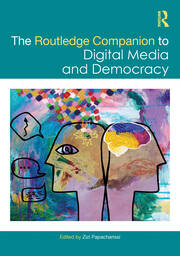
I am pleased to share that my chapter, “Digital Media and Democracy: Coping with Ambivalence,” is now included in The Routledge Companion to Digital Media and Democracy, edited by Zizi Papacharissi and published by Routledge in 2026. The volume brings together a wide range of perspectives on how digital technologies are reshaping democratic life, from participation and journalism to platform governance, misinformation, and AI. My chapter appears in the book’s “Futures” section and reflects on how research can better address the contradictory ways digital media can both strengthen and undermine democracy.
In the chapter, I argue that debates about digital media and democracy remain unresolved not because scholars lack evidence, but because democracy itself is a complex and inherently ambivalent system. Digital media do not simply help or harm democracy; they often do both at once. They can widen participation while enabling misinformation, broaden access to information while deepening polarization, and diversify public debate while amplifying anti-democratic actors. Drawing on research on exposure to diverse viewpoints, news use, participation, and misinformation, I suggest that scholarship has too often examined these outcomes in isolation. To understand digital media’s democratic implications more fully, we need holistic frameworks that capture their interacting effects and the trade-offs they create.
 Cristian Vaccari