My Keynote Speech on Visions of Political Participation in the Digital Age at ZeMKI

In October 2025, I was honored to be one of the keynote speakers for a conference marking the 20th anniversary of the Centre for Media, Communication and Information Research (ZeMKI) of the University of Bremen.

The conference, titled “20 Years into the Future: What is our vision of media, data, and society?“, featured excellent contributions by scholars from different disciplines, backgrounds, and parts of the world, as well as keynote speeches by José van Dijck, Nick Couldry, Alenda Y. Chang, and myself.

In my keynote speech, titled “Visions of political participation in the digital age“, I took the opportunity of ZeMKI’s twentieth anniversary to reflect on how changes in communication environments have reshaped how citizens participate in politics and how that participation is imagined and constructed in everyday discourse and behaviors.

You can watch my keynote speech below. Videos of the other keynotes and important moments of the conference are available on ZeMKI’s YouTube channel.

Elected as Vice Chair of the Political Communication division of ICA

I am delighted to have been elected as Vice Chair of the Political Communication Division of the International Communication Association. In this capacity, I will be responsible for planning the division’s program for the next two annual meetings (Glasgow 2027 and Bangkok 2028) and will then become the division’s Chair for 2029-30, serving on the ICA Board of Directors.

I am humbled and honored by the support of so many of the 850 outstanding colleagues who are members of our Division. I very much look forward to working with our diverse team of internationally minded scholars to support our community and advance our shared goals.

Running to be Vice Chair of the Political Communication division of ICA

Every two years, the Political Communication division of the International Communication Association elects a Vice Chair, who is responsible for planning the division’s program for the next two annual meeting and then becomes the division’s Chair for the following two years.

This year, I have decided to run for this important position. My candidate statement is below:

Amidst mounting threats to democracy worldwide, political communication has never been more central or contested. Our Division is uniquely positioned to respond to these challenges, to advance scholarship that fosters democratic resilience, and to nurture a globally engaged community. As Vice Chair, I would promote innovative, pluralistic, internationally relevant research that deepens scholarly understanding and contributes to societal change. I would work to make our conferences more inclusive by designing panels that bridge subfields and regions and exploring formats that promote dialogue. To empower early-career researchers, I would develop sustained mentorship programs outside the conference as well as professional development and networking initiatives. I would strengthen the Division’s international engagement through expanded travel grants and enduring collaboration with underrepresented communities. Above all, I would work collegially and transparently to ensure priorities and decisions reflect the diverse voices, interests, and perspectives in our community.

My record of service reflects a sustained commitment to pluralistic and globally relevant scholarship. I led research collaborations across five continents. As Editor of The International Journal of Press/Politics, I elevated work from understudied regions, championed emerging voices, and organized six conferences that connected scholars from all around the world. In policy initiatives with the Council of Europe and the European Digital Media Observatory, I partnered with governments, industry, and civil society on data access for researchers, freedom of expression, and disinformation. These experiences have deepened my commitment to bridging diverse perspectives toward shared goals.

The Political Communication Division welcomed me with open arms when I joined ICA twenty years ago. I would be honored to give back by helping our vibrant community tackle the urgent challenges of our times.

The vote is now open until 12:00 noon EDT on 21 October. All members of the ICA Political Communication division are eligible to vote. To vote and read candidates’ statements for all positions, visit the ICA Political Communication Elections website.

Roundup of Recent Publications from the Everyday Misinformation Project

A few articles have recently been published that report research conducted with my colleagues as part of the Everyday Misinformation Project, funded by the Leverhulme Trust and led by Andrew Chadwick (Loughborough University). This mixed-methods project ran from 2021-24 and focused on people’s everyday experiences, social contexts, and media diets to investigate how potentially misleading information spreads online, particularly on personal messaging apps such as WhatsApp, Facebook Messenger, Snapchat, or Apple Messages.

The latest publication is a study titled “Credibility as a double-edged sword: The effects of deceptive source misattribution on disinformation discernment on personal messaging“, published in Journalism & Mass Communication Quarterly and coauthored with Andrew Chadwick, Natalie-Anne Hall, and Brendan Lawson. The abstract is below:

Another recent addition is “Unpacking credibility evaluation on digital media: a case for interpretive qualitative approaches“, published in the Annals of the International Communication Association and coauthored with Pranav Malhotra , Natalie-Anne Hall , Yiping Xia , Louise Stahl , Andrew Chadwick , and Brendan Lawson. Here is the abstract:

In 2025, two more articles were also published in a journal issue after being available online first for a while. First, “The trustworthiness of peers and public discourse: exploring how people navigate numerical dis/misinformation on personal messaging platforms“, which came out in Information, Communication & Society and was coauthored with Brendan Lawson, Andrew Chadwick, and Natalie-Anne Hall. Below is the abstract:

Finally, “Misinformation rules!? Could ‘group rules’ reduce misinformation in online personal messaging?“, published in New Media & Society with Andrew Chadwick and Natalie-Anne Hall. Here is the abstract:

All articles are available open access. I hope you find them helpful!

Stepping down as Editor-in-Chief of IJPP

After six years editing The International Journal of Press/Politics, today is formally my last day on the job. This has been one of the most fulfilling experiences in my career and I am very grateful I had the opportunity to serve our community.

Besides overseeing the publication of more than 250 articles and more than 60 book reviews and review essays focusing on internationally oriented scholarly research on media and politics, including five special issues, I also had the pleasure of organizing six journal conferences, two of which in-person in Loughborough, two online during the COVID-19 pandemic, and two in-person in Edinburgh.

In my farewell editorial, I share a few reflections on what I have learned and recognize the many colleagues and “friends of the journal”, as I call them, who have made this journey so rewarding. The key reflections I share are that our journal stands on the broad shoulders of the many outstanding colleagues who founded it, led it, and nurtured it since 1996; that it is a “big tent” that welcomes insights from diverse disciplines and subfields; that it is a lively, constructive, and respectful community held together by strong shared interests and values; that it is an institution that aims to reliably and transparently fulfill its role in the production and diffusion of social scientific knowledge; that it nurtures emerging voices that constantly expand our scholarship; and that it takes its “international” remit seriously and aims to bridge boundaries and broaden our understanding of media and politics across diverse contexts.

I am delighted that the new Editor-in-Chief, Taberez Ahmed Neyazi, will continue fulfilling this mission, together with the outstanding team that will support him. As I wrote in my farewell editorial, “As they open the IJPP treasure trove now entrusted to them, I am confident they will find in our community the same outstanding and unwavering support, insight, and collegiality that lit the way during my own editorial journey.”

Program of the 10th conference of the International Journal of Press/Politics (University of Edinburgh, 17-18 October 2024)

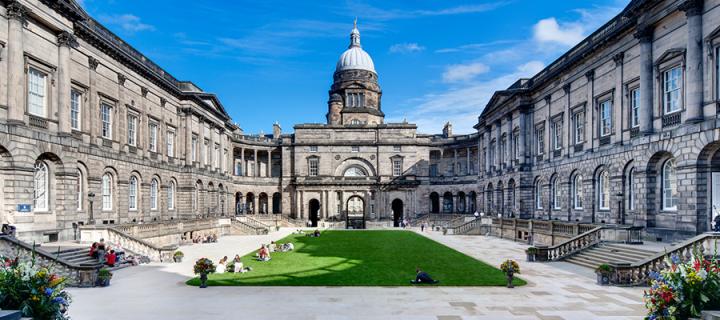
On 17-18 October, more than 100 scholars from many different countries and disciplines will present research on the relationship between media and politics in an international perspective at the University of Edinburgh during the tenth conference of The International Journal of Press/Politics, for which I am honored to serve as Editor-in-Chief. The conference will be held at the John McIntyre Conference Centre at the University of Edinburgh. Registration is required to participate in the conference.

Browse the program by day
Wednesday, October 16
Thursday, October 17
Friday, October 18

Wednesday, October 16

19:30 Conference inaugural dinner
The Scotsman Hotel, 20 North Bridge, Edinburgh, EH1 1TR

Thursday, October 17

8:30-9:00 Coffee and badge pickup

9:00-9:15 Welcome 
Room: Pentland East
Cristian Vaccari (University of Edinburgh) 

9:15-10:30 Plenary session: “International (?) Journal of Press (?) Politics (?): Limited news consumption and what to do about it
Room: Pentland East
Keynote speech by Magdalena Wojcieszak (University of California, Davis)

10:30-11:00 Coffee break  

11:00-12:30 Panel 1A – Incivility, Misinformation, and Radicalization
Room: Pentland East
Chair: Arthur D. Soto-Vásquez (University of Nevada, Las Vegas)

Jennifer Stromer-Galley (Syracuse University) and Patricia Rossini (University of Glasgow) 
Attack and Incivility in U.S. Presidential Campaigns in 2016 and 2020

Curd Knüpfer (University of Southern Denmark), Yunkang Yang (Texas A&M), and Mike Cowburn (European New School, Viadrina) 
Connective Factions: How Hyper-Partisan Media and Highly Networked Elites Radicalize Parties

Taberez Ahmed Neyazi, Tan Khai Ee, and Ozan Kuru (National University of Singapore) 
Moderating Effects of Perceived Political Incivility on the Relationship Between Media Consumption and Misinformation Vulnerability: Evidence from the 2022 Malaysian General Elections

11:00-12:30 Panel 1B – Rethinking Trust in News: Identity, Consumption, and Perceptions Across Audiences
Room: Pentland West 
Chair: Ariel Hasell (University of Michigan)

Tali Aharoni (Hebrew University and University of Oxford)
Redefining trust in the news media 

Diego Garusi and Clara Juarez Miro (University of Vienna)
Unpacking news consumption and trust decisions through a folk theory approach. A study of Austrian young adults

Benjamin Toff, Carolina Velloso, and Michael Ofori (University of Minnesota) 
Bolstering trust by ‘letting them know who we are’: Political identity signalling in New York Times ‘enhanced bios’

11:00-12:30 Panel 1C – Digital Campaigning and Political Communication: Authenticity, Visuals, and Satire in Global Elections  
Room: Prestonfield
Chair: Nick Anstead (London School of Economics)

Filip Bialy (University of Manchester and Adam Mickiewicz University Poznań), Rachel Gibson (University of Manchester), and Karolina Koc-Michalska (Audencia Business School and University of Silesia)
Data-Driven Authenticity?: Unpacking the rise and relevance of relational organising in Digital Campaigning in the Polish Parliamentary and US Presidential Campaign

Gaetano Scaduto (University of Milan Bicocca), Fedra Negri (University of Milan Bicocca), Moreno Mancosu (University of Turin, Collegio Carlo Alberto), and Silvia Decardi (University of Milan Bicocca) 
Emotional Inconsistency in Online Political Communication: A Comparative Study of Text and Imagery by European Party Leaders on Instagram

Sarah Maria Schiffecker and Maria Shpeer (Texas Tech University)
Satirical Politics on Tap: An Analysis of the Austrian Beer Party’s Political Campaign Strategies

12:30-13:30 Lunch break

13:30-14:30 Plenary session: “It Takes a Village (to Edit a Journal)”
Room: Pentland East 
Chair: Cristian Vaccari (University of Edinburgh)

C.W. Anderson (University of Milan)
Danielle K. Brown (Michigan State University)
Sophie Lecheler (University of Vienna)
Sandra González-Bailón (University of Pennsylvania)

14.30-16:30 Panel 2A – Media Narratives and Framing: Candidates, Campaigns, and Policies
Room: Pentland East
Chair: Gaetano Scaduto (University of Milan Bicocca)

Erik P. Bucy (Texas Tech University) and Nathan Ritchie (Loughborough University)
Ideal candidate, populist campaigner, or sure loser? Visual framing of major party candidates in the 2024 US and UK general elections *** presenting remotely

David Smith (University of Leicester), Dominic Wring (Loughborough University), and David Deacon (Loughborough University)
Re-alignment in Parliament, De-alignment in the Press: The 2024 UK general election

Nick Anstead (London School of Economics)
A New Temporal Dimension in Political Communication? The Post-Election Campaign in Liberal Democracies

Niamh Sammon (Technological University Dublin)
The role of Boris Johnson’s journalism in the rise of Conservative Parliamentary Party Euroscepticism, from a critical elite theory perspective  

14.30-16:30 Panel 2B – Media Resilience and Resistance: Journalistic Strategies Against Democratic Backsliding and Populism
Room: Pentland West 
Chair: Adam Koehler Brown (The New School for Social Research)

Kate Wright (University of Edinburgh), Martin Scott (University of East Anglia), and Mel Bunce (City, University of London)
How journalists resist democratic backsliding

Simone Benazzo (Université Libre de Bruxelles), Colin Porlezza (Università della Svizzera Italiana)
Journalism Innovation in Autocratizing Countries: Comparing Independent Media’s Resilience Strategies in Poland and Slovakia

Raiana de Carvalho (Furman University), Joao V. S. Ozawa (University of North Dakota), and Arthur D. Soto-Vásquez (University of Nevada, Las Vegas) 
Memory-Making of the January Attacks in Brazil and the United States: Examining the Role of YouTube in Collective Remembrances of Far-Right Insurrections

Azmat Rasul (Zayed University) 
Morally Disengaged Politics: Digital Media Use and Populist Politics in Pakistan

14.30-16:30 Panel 2C – Understanding the Diffusion and Effects of Misinformation across Different Contexts
Room: Prestonfield
Chair: Curd Knüpfer (University of Southern Denmark)

Thomas J. Billard (Northwestern University), Rachel E. Moran (University of Washington), Nash Jenkins (Northwestern University), and Walker West Brewer (Northwestern University)
Cross-National Agenda-Setting and the Global Spread of Misinformation: Unpacking the Transatlantic Flow of Anti-Transgender Misinformation between the US and the UK

Marlis Stubenvoll (University of Klagenfurt), Isabelle Freiling (University of Utah), and Jörg Matthes (University of Vienna)
Fact-bombing and fake-bombing: A dose-response experiment on the effects of repeated information sharing on social media

Augusto Valeriani (University of Bologna), Laura Iannelli (University of Sassari), and Giada Marino (University of Urbino)
The role of “News-Finds-Me” Perception, Political Knowledge, and Ideological Extremism in Misinformation Sharing Practices

Elena Broda (University of Gothenburg)
Seeing is not believing: The role of media trust and ideology in the differential susceptibility to media effects on misperceptions

16:30-17:00 Coffee break

17:00-18:30 Panel 3A – Political Communication and International Affairs: Geopolitics, Competition, and Conflict
Room: Pentland East
Chair: Babak Bahador (George Washington University)

Yaron Ariel, Dana Weimann, and Vered Elishar (The Max Stern Yezreel Valley College)
Influence of News Consumption and Psychological Factors on the Propagation of War-Time Rumors *** presenting remotely

Peter Berglez (Örebro University,) and Lea Hellmueller (City, University of London)
Towards Geopolitical Media Spheres? Theorizing Journalism in the De-Globalizing, Multipolar World Order

Yu-Chung Cheng, Hsin-HsienWang, Shinn-Shyr Wang, and Wei-Feng Tzeng (National Chengchi University)
Navigating Polarization: Understanding Twitter’s Dialogue on China in a Competitive Global Context

17:00-18:30 Panel 3B – News Sharing and Engagement Online: Messaging, Reporting, and Framing Contemporary Issues 
Room: Pentland West 
Chair: Raquel Recuero (Universidade Federal de Pelotas and National Institute of Science and Technology on Information Disputes and Sovereignty)

Isabele Mitozo (Federal University of Minas Gerais), João Cardoso L. Camargos (University of North Carolina at Chapel Hill and Federal University of Minas Gerais), and Camila Mont’Alverne (University of Strathclyde)
Exploring information sharing on instant messaging: An analysis of public Brazilian WhatsApp groups pro-Bolsonaro from 2018 to 2023

Johanna Disdier (Swansea University)
Geographical Influences on Media Reporting and Sharing of Contested Political Election Outcomes

Sabena Abdul Raheemm, Uchenna Eze, and Sang Jung Kim (University of Iowa)
“Modern Day Slavery”: Exploring the use of emotional frames in Human Trafficking education videos on YouTube and audience engagement

17:00-18:30 Panel 3C – Artificial Intelligence and Journalism: Trust, Attitudes, and Perspectives
Room: Prestonfield
Chair: Maysa Amer (Freie Universitaet Berlin, Germany)

Richard Fletcher, Felix M. Simon, Waqas Ejaz and, Rasmus Kleis Nielsen (University of Oxford)
What influences attitudes towards the use of generative AI in news?

Sophie Morosoli, Valeria Resendez, and Emma van der Goot (University of Amsterdam) 
Trust in the age of AI. An experiment on how transparency impacts individuals’ trust in AI as a news source and perceived manipulation

Taewoo Kang (Michigan State University), Tim Vos (Michigan State University), Thomas Hanitzsch (Ludwig-Maximilians Universität Munich), Neil Thurman (Ludwig-Maximilians Universität Munich), and Imke Henkel (University of Leeds)
AI in the Shoes of Journalists: Which Journalists’ Perspectives Do LLMs Reflect?

19:30  Conference dinner

Playfair Library Hall, Old College, South Bridge, Edinburgh EH8 9YL

Go back to the top

Friday, October 18

8:30-9:00 Coffee and refreshments

9:00-10:30 Panel 4A – AI in News and Elections: Public and Expert Perceptions 
Room: Pentland East 
Chair: Isabele Mitozo (Federal University of Minas Gerais)

Aqsa Farooq, Marina Tulin, Elske van den Hoogen, and Claes de Vreese (University of Amsterdam)
Generative AI and the European Elections 2024: A Citizens’ Perspective 

Amy Ross Arguedas, Felix M. Simon, Richard Fletcher, and Rasmus K. Nielsen (University of Oxford)
“For serious stuff like war or politics, you need people”: A qualitative study of public attitudes towards AI in news in Mexico, the United Kingdom, and United States

Bronwyn Jones (University of Edinburgh) and Vassilis Galanos (University of Stirling)
Generating risk: A qualitative study of experts’ perceptions of the risks posed by generative AI for journalism and the news ecosystem

9:00-10:30 Panel 4B – Media Influence on Political Attitudes: Negativity, Radicalization, and Partisanship in the United States
Room: Pentland West 
Chair: Sacha Altay (University of Zürich)

Ariel Hasell (University of Michigan)
Overwhelmed by abundance and negativity: The consequences of political defeatism in the United States

Jun Luo (University of California, Los Angeles), Brett McCully (Collegio Carlo Alberto), and Wookun Kim (South Methodist University)
Radicalized by Local News Broadcasting? How Partisan Media Affects Hate Crimes in the United States

Asfa Shakeel (London School of Economics)
Partisan News and Polarisation

9:00-10:30 Panel 4C – Popular Culture and Politics in the Digital Age: TikTok, Music, and Football
Room: Prestonfield
Chair: Matthew Powers (University of Washington)

Giovanni Boccia Artieri and Valeria Donato (University of Urbino Carlo Bo)
TikTok private sphere: understanding the new features of the algorithmic public sphere

Dan Hiaeshutter-Rice (Michigan State University), Mia Carbone (University of California, Los Angeles), Ezgi Ulusoy (Michigan State University), Dustin Carnahan (Michigan State University), Manu Sastry (Michigan State University), and Joanna Gusis (Michigan State University)
Now It’s All About Versace: Music Preferences and Partisanship

Caroline Patatt and Jéssica Sandes Furtado (Universidade da Beira Interior)
Football is Politics: Analyzing Public Emotions in Neymar Jr.’s Case and PEC das Praias through the Instagram Accounts of Folha de S.Paulo and O Globo Newspapers

10:30-11:00 Coffee break 

11:00-13:00 Panel 5A – Threats and Challenges to Journalistic Work: Dissent, Suppression, and Shifting Dynamics in Newsrooms   
Room: Pentland East 
Chair: Simone Benazzo (Université Libre de Bruxelles)

Ricardo Ribeiro Ferreira (University of Edinburgh) 
Resistance is Futile: Covert Dissent and Rationalisation in Captured Newsrooms

Linette Lim (University College Dublin)
Unwanted Witnesses: Authoritarian Information Suppression Tactics and Resident Foreign Journalists in China

Roei Davidson and Oren Meyers (University of Haifa)
Under pressure: Journalistic work and the public interest in an era of media clientelism

Russell Hansen, Meagan Doll, Patricia Moy, and Matthew Powers (University of Washington)
The Feminization of Statehouse Reporting in the United States: A Field Analysis

11:00-13:00 Panel 5B – Media Narratives, Frames, and Public Perceptions in the Russia-Ukraine War
Room: Pentland West 
Chair: Lea Hellmueller (City, University of London)

Ben O’Loughlin (Royal Holloway, University of London) and Babak Bahador (George Washington University)
Framing Peace in the Russia-Ukraine War: Peace journalism and news narratives

Delia Dumitrescu (Heidelberg University)
Visions of the War in Ukraine across European Mainstream Media Facebook Sites: A Computer Vision Approach

Kenzie Burchell (University of Toronto) 
Newsfeeds of Individualized Suffering and Asymmetrical Power: Social Media Templates, Russian-language Reporting, and the Ukrainian War

Catherine A. Luther (University of Tennessee), Joshua D. Borycz (Vanderbilt University), Benjamin D. Horne (University of Tennessee), R. Alex Bentley (University of Tennessee), Suzie Allard (University of Tennessee), Brandon C. Prins (University of Tennessee), Garriy Shteynberg (University of Tennessee)
Media Trust and Opinions Regarding Russia’s 2022 Invasion of Ukraine Amongst Russian-speaking Populations in Belarus and Ukraine – Pre and Post Invasion 

11:00-13:00 Panel 5C – Navigating Media Manipulation: Disinformation, Corporate Messaging, and Regulation
Room: Prestonfield
Chair: Aqsa Farooq (University of Amsterdam)

Chris Wells, Michelle Amazeen, and Sara Weinberg (Boston University)
How fossil fuel companies position their sincerity about climate action through native advertisements in American and British news media

Sacha Altay (University of Zürich), Emma Hoes (University of Zürich), and Magdalena Wojcieszak (University of California, Davis and University of Amsterdam)
News on Social Media Boosts Knowledge Belief Accuracy and Trust. An Instagram and WhatsApp field experiment in France and Germany

Jaume Suau (Blanquerna School of Communications and International Relations) and Dren Gërguri (University of Prishtina)
Disinformation narratives in Eastern Europe: Reach, impact and spreading patterns

Maysa Amer (Freie Universitaet Berlin, Germany)
Platform Regulations in the Mena Region: Countering Disinformation and Power Dynamics

13:00-14:00 Lunch break

14:00-15:30 Panel 6A – Evolving Landscapes in Digital Journalism: Time, Algorithms, and Hybridity
Room: Pentland East 
Chair: Benjamin Toff (University of Minnesota) 

C.W. Anderson (University of Milan), Danielle K. Brown (Michigan State University), Eugenia Michelstein (Universidad de San Andrés)
Time, Space, and the History of Digital News

Alexandra Colombier (University of Le Havre) and Duncan McCargo (Nanyang Technological University)
Hybrid Platformism: The Contentious Politics of Thailand’s Digital Media Landscape

Alyaa Anter (Ajman University) and Nermeen Ibrahim (Al-Ahram Canadian University) 
New Gatekeepers: The Impact of Social Media Algorithms on Arab TV News Channels Coverage of Arab Issues

14:00-15:30 Panel 6B – Populism and Media Performance: Far-Right Discourses and Political Imagery
Room: Pentland West 
Chair: Clara Juarez Miro (University of Vienna)

Ana Langer (University of Glasgow), Lluis de Nadal (University of Glasgow), and Eugenia Mitchelstein (Universidad de San Andrés)
Enter Milei: Performing populism in the hybrid media syste

Raquel Recuero (Universidade Federal de Pelotas and National Institute of Science and Technology on Information Disputes and Sovereignty) and Guilherme Curi (National Institute of Science and Technology on Information Disputes and Sovereignty)
From Newspapers to Newsfeeds: How Traditional Media and Facebook Legitimate Far-Right Discourses in Brazil and Argentina

Adam Koehler Brown (The New School for Social Research)
Corpus Exsecutiva: The Cultural Politics of the Body of Donald J. Trump

14:00-15:30 Panel 6C – Audiences in the Digital Age: The Role of Context, Group Dynamics, and Events
Room: Prestonfield
Chair: Walker Brewer (Northwestern University)

Shelley Boulianne and Kim Andersen (University of Southern Denmark)
Tuning Out on Current Affairs: Global Variations in Non-Use of News on Traditional and Social Media and Across Age and Political Interest

Subham Basak (University of Oxford)
Views and Voters: Interaction with online political information among young men from low-privilege backgrounds in Kolkata (India)

Claire Roney (University of Vienna), Daniel Wiesner (University of Vienna), Andreas A. Riedl (Ludwig-Maximilians Universität Munich), and Jakob-Moritz Eberl (University of Vienna)
Rally and Recalibrate – Political Dynamics Of Audience Expectations Of Journalism During Times of Crisis

15:30-16:00 Coffee break

16:00-17:30 Panel 7A – New Perspectives on Media Effects: Self-Censorship, Polarization, and Reinforcement
Room: Pentland East 
Chair: Shelley Boulianne (University of Southern Denmark)

Moran Yarchi (Reichman University), Dana Markowitz-Elfassi (Reichman University), Tsahi (Zack) Hayat (Reichman University), and Amir Leshem (Bar-Ilan University)
The Spiral of Silence 2.0: Is the theory still relevant in social media group discussions?

Emelie Karlsson (Uppsala University) 
Social media bots, trolls and political polarization: Evidence from a survey experiment

Kim Andersen (University of Southern Denmark) and Adam Shehata (University of Gothenburg)
Preference for Valenced News and Reinforcement of Societal Beliefs

16:00-17:30 Panel 7B –  Trust in News and Science: Media Influence, Fact-Checking, and Public Perceptions
Room: Pentland West
Chair: Michelle Amazeen (Boston University)

Kathleen Beckers and Edina Strikovic (University of Amsterdam)
Public Opinion in Public Spaces. The Influence of Social Media on News Credibility and Public Perceptions

Matus Sloboda, Andrej Findor, Pavol Hardoš, and Artsiom Klunin (Comenius University)
The Effects of Information Provision about Fact-Checking on News Credibility and Reader Support: Evidence from Field-Experiments in Five CEE Countries

Afonso Biscaia (University of Lisbon), Susana Salgado (University of Lisbon), João Carlos Sousa (University of Lisbon), and Rosa Berganza (University Rey Juan Carlos)
Anti-elitism and trust in science: A complex relation moderated by media use? Evidence from the UK, Portugal, and Spain

16:00-17:30 Panel 7C – Media, Politics, and Influence: Scandals, Social Media, and Politicians’ Perceptions
Room: Prestonfield
Chair: Patricia Rossini (University of Glasgow)

Yukio Maeda (University of Tokyo) and Matthew Carlson (University of Vermont)
Political Speech, Scandals, and the News Media in Japan

Shepuya Famwang (University of Southampton) 
Discursive Practices of Political Social Media Influencers in the 2023 Nigerian Election

Karolin Soontjens (University of Antwerp) Kathleen Beckers (University of Amsterdam), Emma van der Goot (University of Amsterdam), and Sophie Morosoli (University of Amsterdam)
Press and Prejudice: an interview study on why politicians feel disadvantaged by the media

17:30-18:15 Concluding remarks
Room: Pentland East
Cristian Vaccari (University of Edinburgh)
Taberez Ahmed Neyazi (National University of Singapore)

18:15  Farewell drinks reception

Go back to the top
Call for papers for the 10th annual conference of The International Journal of Press/Politics (University of Edinburgh, UK, 17-18 October 2024)

Call for papers
10th Annual Conference of the International Journal of Press/Politics
University of Edinburgh, UK, 17-18 October 2024
Deadline for abstracts: 14 June 2024 via https://bit.ly/IJPP2024

On 17-18 October 2024, the University of Edinburgh will host the 10th annual conference of the International Journal of Press/Politics, focused on academic research on the relationship between media and political processes around the world.

The deadline for submission of abstracts is 14 June 2024. Attendees will be notified of acceptance by 1 July 2024. Registration fees will be due 30 August 2024 and full papers based on accepted abstracts will be due 4 October 2024. A selection of the best papers presented at the conference will be published in the journal after peer review. Previous special issues based on conference papers can be found here, here, and here. An editorial discussing the selection and review process for conference special issues can be found here.

The conference brings together scholars conducting internationally oriented or comparative research on the intersection between news media and politics around the world. It aims to provide a forum for academics from a wide range of disciplines, countries, and methodological approaches to advance knowledge in this area.

Examples of relevant topics include, but are not limited to, the political implications of changes in media systems; the importance of different types of media for learning about and engaging with politics; the factors affecting the quality of political information and public discourse; media policy and regulation; the role of entertainment and popular culture in how people engage with current affairs; relations between political actors and journalists; how emerging applications of Artificial Intelligence affect key political communication processes; the role of visuals and emotion in the production and processing of public information; the role of different kinds of media during conflicts and crises; and political communication during and beyond elections by government, political parties, interest groups, civil society organizations, and social movements.

The journal and the conference are particularly interested in studies that represent substantial theoretical or methodological advances on these issues in an international perspective, especially by adopting comparative approaches and/or focusing on parts of the world that are under-researched in the English-language academic literature.

Titles and abstracts for papers (maximum 300 words) are invited by 14 June 2024 via the online form available at https://bit.ly/IJPP2024. Abstracts should clearly describe the key questions, the theoretical and methodological approach, the evidence presented, and the wider implications of the study for understanding the relationship between media and politics in an international perspective. Authors are encouraged to provide as much detail as possible about the spatial and temporal context of their study, the research design and methods employed, the data collected, and the main results of the analyses.

The registration fee for the conference will be GBP 300, to be paid by 30 August 2024. The fee covers two conference dinners on 16 and 17 October, lunches and coffee breaks on 17 and 18 October, and farewell drinks on 18 October. The conference will take place at the University of Edinburgh’s John McIntyre Conference Centre.

A limited number of registration fee waivers will be available for early career scholars and scholars from countries that appear in Tiers B and C of the classification adopted by the International Communication Association. Applications for fee waivers must be made via the abstract online submission form available at https://bit.ly/IJPP2024.

The conference is organized by Cristian Vaccari, Editor-in-Chief of IJPP. Please contact Professor Vaccari with questions at cvaccari@ed.ac.uk.

More about the University and the journal below.

The University of Edinburgh has been influencing history since it welcomed its first students in 1583. Through the many achievements of its staff and students, the University has delivered on its central principles of providing cutting-edge research, inspirational teaching and innovative thinking, attracting some of the greatest minds from around the globe. Politics and International Relations (PIR) is one of the largest and most vibrant subject areas at the University of Edinburgh. It is home to more than 600 undergraduates and 100 postgraduate students annually. Its alumni include government ministers, members of parliament, policy analysts, broadcasters, business leaders, teachers, and social entrepreneurs. Its world-leading research directly informs policymakers, ministers, and NGOs.

The International Journal of Press/Politics is an interdisciplinary journal for the analysis and discussion of the role of the media and politics in an international perspective. The journal publishes theoretical and empirical research which analyzes the linkages between the news media and political processes and actors around the world, emphasizes international and comparative work, and links research in the fields of political communication and journalism studies, and the disciplines of political science and media and communication. The journal is published by SAGE Publishing and is ranked 14th in Political Science and 17th in Communication according to Clarivate.

Program of the ninth conference of the International Journal of Press/Politics (University of Edinburgh, 11-13 October 2023)

On 11-13 October, ninety scholars from many different countries and disciplines will present research on the relationship between media and politics in an international perspective at the University of Edinburgh during the ninth conference of The International Journal of Press/Politics, which I am honored to serve as Editor-in-Chief. The conference will be held at the John McIntyre Conference Centre at the University of Edinburgh. Registration is required to participate in the conference.

Browse the program by day
Wednesday, October 11
Thursday, October 12
Friday, October 13

Wednesday, October 11

19:30 Conference inaugural dinner
Bistro du Vin Edinburgh, 11 Bristo Pl, Edinburgh EH1 1EZ

Thursday, October 12

8:30-9:00 Coffee and badge pickup

9:00-9:15 Welcome 
Room: Pentland East 
Cristian Vaccari (University of Edinburgh)

9:15-10:30 Keynote address
Room: Pentland East 
Rasmus Kleis Nielsen (University of Oxford)
Platform power and State power

10:30-11:00 Coffee break

11:00-12:30 Panel 1A – Digital media, protest, and community-building
Room: Pentland East
Chair: Matthew Hindman (George Washington University)

Sabena Abdul Raheem (University of Iowa), Barikisu Ishaka (Michigan State University),
Inusah Mohammad (Purdue University) ** presenting remotely
Unleashing the Power of Digital Activism: Muslim Women, Non-Governmental Organizations, and the Fight for Social Equality

Frankie Ho Chun Wong (University of Maryland, College Park)
Not all protests are created equal to be news: Does digital connectivity level the playing field in the hybrid media system?

Yang Hu (Macau University of Science and Technology)
Clinging to politically similar others: The construction of interpretive communities in gangpiao’s microprocesses of politicization

11:00-12:30 Panel 1B – Media representation of issues and groups
Room: Pentland West
Chair: Ana Ines Langer (University of Glasgow)

Ayala Panievsky (University of Cambridge), Lior Birger (Tel Aviv University), Shahar Soham (Humboldt University of Berlin)
When Journalists Meet Refugees

Noha Mellor (University of Sharjah)
Mediating Poverty on Iraqi Television

Heinz Brandenburg (University of Strathclyde), Brian Boyle (University of Newcastle), Yulia Lemesheva (University of Strathclyde)
Demographic and Political Issue Representation in UK Public Broadcasting: Brexit and the Iraq War on BBC Question Time

11:00-12:30 Panel 1C – News coverage and public debate
Room: Salisbury
Chair: Irene Larraz (Universidad de Navarra)

Anna Sámelová (Comenius University in Bratislava)
From Television Ownership to Prison: The Ambivalent Role of Media in Promoting Narratives of a Toxic Celebrity

Liu Fangyuan and Sharma Rajat (Hong Kong Baptist University)
The Most Distant Neighbors: Comparing the Media Coverage of Political Leaders in China and India’s News Media 

Deniz Demir (Marmara University)
Comparative Analysis of Media Influence in 2023 Elections: A Comparative Study of Greece and Turkey

12:30-13:30 Lunch break

13.30-15:00 Panel 2A – Theorizing and researching media effects
Room: Pentland East
Chair: Erik Bucy (Texas Tech University) 

Thomas J. Billard, Nash Jenkins (Northwestern University)
A Dependency Model of Misinformation Effects

Maximilian Overbeck, Keren Tenenboim-Weinblatt, Christian Baden (Hebrew University of Jerusalem) ** presenting remotely
Projecting Tomorrow’s Challenges: A Theoretical and Empirical Investigation of Setting Future Agendas

Ana S. Cardenal (Universitat Oberta de Catalunya), David Hopmann (University of Southern Denmark), Silvia Majó-Vázquez (Vrije University Amsterdam), Ludovic Terren (University of Antwerp), Peter Van Aelst (University of Antwerp), Alon Zoizner (University of Haifa)
Does online media increase news learning? Evidence from survey and web-tracking data across five Western democracies

13.30-15:00 Panel 2B – News consumption and engagement
Room: Pentland West
Chair: Sophie Morosoli (University of Amsterdam)

Shira Dvir-Gvirsman, Lidor Ivan (Tel Aviv University)
Exploring the Influence of SES on News Supply and Engagement with News on Facebook

Willem Buyens (University of Antwerp)
Media political parallelism and user engagement with online news sharing posts by politicians in 15 countries

Silvia Majó Vázquez (Vrije University Amsterdam), Ana S. Cardenal (Universitat Oberta de Catalunya, María Victoria-Mas (Universitat Abat Oliva (Spain), Iván Lacasa (Universitat Internacional de Catalunya)
Ideological Diversity of Media Diets on Messaging Apps: Evidence from Mobile Navigation Data in the UK and Spain

13.30-15:00 Panel 2C – Media and politics: international perspectives
Room: Salisbury
Chair: Cherian George (Hong Kong Baptist University)

Hanne Tillemans (University of Antwerp), Kathleen Beckers (University of Amsterdam)
Examining Impartiality in Journalistic Ethics Codes: A Comparative Study

Ki-Sung Kwak (University of Sydney)
Press-Politics Relations in South Korea

Adrian Hillman (Goldsmiths, University of London)
Understanding of the role of advocacy in a polarized state: Revisiting the construction of news

15:00-15:30 Coffee break

15:30-17:30 Panel 3A – Artificial Intelligence, news, and politics
Room: Pentland East
Chair: Junyan Zhu (University of Sheffield)

Sophie Morosoli (University of Amsterdam)
I Resist. A Study on Individuals’ Attitudes towards AI in Journalism in Connection with Individual Acts of Resistance, Risk Perceptions and Trust 

Benjamin Toff (University of Minnesota), Felix M. Simon (University of Oxford)
Can AI-generated journalism help build trust among skeptical audiences?

Taberez Ahmed Neyazi (National University of Singapore), Arif Nadaf (Islamic University, Kashmir), Tan Khai Ee (National University of Singapore), Ralph Schroeder ( University of Oxford)
The Effect of Information Seeking Behavior on Trust in AI in Asia: The Moderating Role Of Misinformation Concern

15:30-17:30 Panel 3B – Understanding the disconnect between news and citizens
Room: Pentland West
Chair: Camila Mont’Alverne (University of Oxford)

Hanne Peeters (KU Leuven), Joren Van Nieuwenborgh (University of Antwerp), Nathalie Van Raemdonck (Vrije Universiteit Brussels), Michaël Opgenhaffen (KU Leuven), Ike Picone (Vrije Universiteit Brussels), Peter Van Aelst (University of Antwerp)
Painting a picture of the doubtful news consumer: Exploring the concept of news doubt and news doubters’ strategies

Kim Andersen, Katrine Bruun Rasmussen (University of Southern Denmark)
Dimensions of Mainstream Media Criticism: A Mixed Methods Study of The Dissatisfied News Audience

Paul D’Angelo (The College of New Jersey) & Erik Bucy (Texas Tech University) 
Priming Accountability: How Coverage of Media Scandal Primes Press Attitudes and Shapes Journalistic Credibility

Diego Garusi (University of Vienna), Sergio Splendore (University of Milan)
The platformization of news media trust: Trust patterns in a changing media environment

15:30-17:30 Panel 3C – Media and challenges to democracy and freedom
Room: Salisbury
Chair: Sumit Mukerji (University of Kalyani)

Stephen Harrington (Queensland University of Technology, Kristy Hess (Deakin University), Aljosha Karim Schapals (Queensland University of Technology), Timothy Graham (Queensland University of Technology)
‘Dark Political Communication’: A challenge for democracy

Ricardo Ribeiro Ferreira (University of Edinburgh) 
It Forces You to Publish Some Shit”: Towards a Taxonomy of De-democratising Journalistic Practices

WeiMing Ye, Shuangze Dai (Peking University)
Platforms’ Rule and Media Agencies’ Strategies under the Short Video Content Moderation Policy

17:30-18:00 Coffee break

18:00-19:00 Plenary to honor the winners of the 2023 Hazel Gaudet-Erskine Best Book Award
Room: Pentland East
Gadi Wolfsfeld (Reichman University)
The Politics-Media-Politics Approach (PMP): A Short Introduction to a Long Book

19:30 Conference dinner
South Hall, Pollock Halls, Address: 18 Holyrood Park Rd, Edinburgh EH16 5AR

Go back to the top

Friday, October 13

8:30-9:00 Coffee and refreshments

9:00-10:30 Panel 4A – Online campaigning: Dynamics and developments
Room: Pentland East
Chair: Adam Shehata (University of Gothenburg)

Kate Dommett, Junyan Zhu, Samuel A. Mensah, Tom Stafford (University of Sheffield)
Understanding persuasive strategies used in online political advertising and how the public views them

Matt Walsh (Cardiff University), Jane B. Singer (City, University of London)
Disintermediated Campaigning on Facebook in Three UK General Elections

Ahmed El Kadib (University Paul Valéry and University of Burgundy), Idriss El Ouafa (University Ibn Zohr) ** presenting remotely
The Changing Landscape of Political Communication in Morocco: A Netnographic Analysis of Facebook during the 2016 and 2021 Elections

9:00-10:30 Panel 4B – Government censorship and propaganda
Room: Pentland West
Chair: Taberez Ahmed Neyazi (National University of Singapore)

Matt DeButts, Jennifer Pan (Stanford University)
Reporting After Removal: The Effects of Journalist Expulsion on Foreign News Coverage

Yunkang Yang (Texas A&M University), Stefan McCabe (George Washington University), Matthew Hindman (George Washington University)
Russian Propaganda on Facebook: Topic coverage and user engagement with RT and Sputnik over four years

Daria Kravets (University of Passau)
Yandex’s Top-5 News Algorithm As a Resource for Russia’s Informational Influence in Belarus: An Analysis From 2010 to 2022

9:00-10:30 Panel 4C – Communicating science in challenging times
Room: Salisbury
Chair: Lie Philip Santoso (Duke Kunshan University)

Ana Stojiljkovic, Sabina Mihelj (Loughborough University)
Pandemic Communication in Times of Populism 

Rosalind Donald (American University), Lucas Graves (University of Wisconsin–Madison)
Comparing “accountability contexts”: How environmental facts matter in three distinct institutional settings

Delia Dumitrescu, Mina Trpkovic (Heidelberg University)
The Nonverbal Framing of Covid-19 Disinformation Messages in Global Perspective

10:30-11:00 Coffee break

11:00-13:00 Panel 5A – Political communication and the challenges of equality
Room: Pentland East
Chair: Kate Wright (University of Edinburgh)

Meredith D. Clark (Northeastern University)
Sins of Omission: Contemporary Implications of the AP Stylebook’s Historical Silence on Racism 

Dayei Oh, Bok-Yong Shin (University of Helsinki)
Unveiling gender inequalities to sensationalising gender wars: Historical shift in South Korean press discourse on feminism using topic modelling, 1990-2022 

Michael Heseltine (University of Amsterdam)
Hostile Public Engagement with Women in the Media

Rachel Grant, Nikki Lyons (University of Florida)
Focusing on the Fellas: Stacey Abrams’ Social Media Campaign Addresses Misogynoir

11:00-13:00 Panel 5B – Misinformation, misperceptions, and threats to democracy
Room: Pentland West
Chair: Ana S. Cardenal (Universitat Oberta de Catalunya)

Nikki Usher (University of San Diego), Jessica Hagman (University of Illinois Urbana-Champaign), Abigale Baines (University of San Diego), Mia Delmonico (University of San Diego)
A Micro study of a Mini-Trump: Media Storms, Politics-Media-Politics, and the Amplification of Anti-Democratic Actors 

Jaume Suau (Blanquerna School of Communications and International Relations), David Puertas (Universitat Ramon Llull)
Assessing the reach and impact of disinformation narratives in European countries

Daniel Angus, Stephen Harrington, Axel Bruns, Nadia Alana Jude, Phoebe Matich, Edward Hurcombe (Queensland University of Technology)
“What else are they talking about?”: A large-scale longitudinal analysis of misinformation super-spreader communities on Facebook

Brian Weeks (University of Michigan)
The Emotional Dynamics of Partisan Media and Political Misperceptions

11:00-13:00 Panel 5C – Media systems and their political implications
Room: Salisbury
Chair: Noha Mellor (University of Sharjah)

Dina Vozab (University of Zagreb), Zrinjka Perusko (University of Zagreb), Filip Trbojević (University of Zagreb), Lars Nord (Mid Sweden University), Mart Ots (Jönköping University), Evangelia Psychogiopoulou (Hellenic Foundation for European and Foreign Policy), Marcus Kreutler (TU Dortmund), Peter Berglez (Örebro University), Ragne Kõuts-Klemm (University of Tartu), Epp Lauk (University of Tartu), Halliki Harro-Loit (University of Tartu)
Media System Characteristics for Deliberative Communication: A fsQCA analysis

Tamer Farag (Freie Universität Berlin), Christoph Neuberger (Freie Universität Berlin), Annika Sehl (Katholische Universität Eichstätt-Ingolstadt), Sonja Kretzschmar (Universität der Bundeswehr München), Jana Gäng (Freie Universität Berlin), Linda Wiethaus (Freie Universität Berlin)
Media System’s Transformation and Intrastate Conflict: Analyzing traditional and digital media in Afghanistan with a focus on the Taliban takeover

Meiqing Zhang (University of Southern California)
Media and the Delegitimation of Authoritarian Rule

Sumit Mukerji (University of Kalyani)
TRP and Indian Television: Creation of Political Combat zone

13:00-14:00 Lunch break

14:00-15:30 Panel 6A – Global threats to media freedom
Room: Pentland East
Chair: Nikki Usher (University of San Diego)

Kate Wright (University of Edinburgh), Martin Scott (University of East Anglia), Mel Bunce (City, University of London)
Capturing International Public Service Media

Cherian George, Cheng Yujia (Hong Kong Baptist University)
Enemies Within: Press versus Press Freedom in Hong Kong

Kenza Lamot (Vrije Universiteit Amsterdam), Kathleen Beckers (University of Amsterdam), Peter Van Aelst (University of Antwerp)
Silencing the Fourth Estate: Understanding the Origins and Impact of Intimidation and Harassment Against Political Journalists

14:00-15:30 Panel 6B – News, politics, and political polarization
Room: Pentland West
Chair: Patricia Rossini (University of Glasgow)

Camila Mont’Alverne, Amy Ross Arguedas, Sayan Banerjee, Benjamin Toff, Richard Fletcher, Rasmus Kleis Nielsen (University of Oxford)
Exposure to Partisan News, Affective Polarization, and Voting Choice: Evidence from the 2022 Brazilian Elections

Adam Shehata (University of Gothenburg)
News Exposure and the Social Dimension of Belief Reinforcement: A Study of Reinforcing Spirals Using Six-Wave Panel Survey and Focus Group Data

Lie Philip Santoso (Duke Kunshan University)
Who Cooperates with Whom? The Role of Day-to-Day Partisan Cooperation on Affective Polarization

14:00-15:30 Panel 6C – Climate communication: Promises and perils
Room: Salisbury
Chair: Brian Weeks (University of Michigan)

Edwin Jans, Sanne Kruikemeier, Rens Vliegenthart (Wageningen University & Research)
A recipe for a gridlock? Polarization around climate change in the media and political debates?

Lluis de Nadal (Glasgow University)
Climate Policy Contestations: The Role of Alternative Influence Networks on YouTube

Luca Rossi (IT University of Copenhagen), Alexandra Segerberg (Uppsala University),  Luigi Arminio (IT University of Copenhagen), Matteo Magnani (Uppsala University)
Can you physically burst the bubble for climate?

15:30-16:00 Coffee break

16:00-17:30 Panel 7A – Politicians’ communication and self-presentation
Room: Pentland East
Chair: Willem Buyens (University of Antwerp)

Emma van der Goot (University of Amsterdam), Toni van der Meer (University of Amsterdam), Michael Hameleers (University of Amsterdam), Rens Vliegenthart (Wageningen University and Research)
Do politicians knowingly create conflict for media attention? 

Diego Ceccobelli (University of Milan), Luigi Di Gregorio (Tuscia University)
Is it all a matter of authenticity? An analysis of seven Italian political leaders from a multi-level perspective 

Haye Stein (Friedrich Schiller University Jena), Ines Engelmann (Friedrich Schiller University Jena), Simon M. Luebke (Ludwig Maximilian University of Munich) ** presenting remotely
The Impact of Politicians’ Populist Performance on Perceived Political Authenticity

16:00-17:30 Panel 7B – New perspectives on fact-checking
Room: Pentland West
Chair: Benjamin Toff (University of Oxford)

Irene Larraz, Ramón Salaverría, Javier Serrano-Puche (Universidad de Navarra)
Combating Repeated Lies: Impact of Fact Checking on Persistent Falsehoods by Politicians

Waqas Ejaz (University of Oxford), Sacha Altay (University of Zurich), Muhammad Ittefaq (James Madison University)
Trust, Engagement, and Belief: Unraveling the Dynamics of Fact-Checking

Lisa Waller, Lucy Morieson (RMIT University)
Where political science, journalism and fact-checking coalesce: An Australian case study of political promise tracking

16:00-17:30 Panel 7C – Government communication in times of crisis and change
Room: Salisbury
Chair: Delia Dumitrescu (Heidelberg University)

Aysenur Dal, Zeki Sarigil (Bilkent University)
Exposure to Competing Crisis Frames and Perceptions about the Freedom of Online Political Expression 

Jairo Lugo-Ocando (University of Sharjah), Fisal Alaqil (King Saud University), Abdullah Alhuntush (King Khalid Military Academy) 
Influencers, Journalists and Public Engagement with Science in MENA: Reach and co-opted message

Taner Dogan (Queen Margaret University)
Communicating Hagia Sophia as an emotional holy space and reshaping collective memory in a populist digital age

17:30-18:00 Concluding remarks
Room: Pentland East
Cristian Vaccari (University of Edinburgh)

18:00 Farewell drinks reception

Go back to the top
Call for papers for the 9th annual conference of The International Journal of Press/Politics (University of Edinburgh, UK, 12-13 October 2023)

Call for papers
9th Annual Conference of the International Journal of Press/Politics
University of Edinburgh, UK, 12-13 October 2023
Deadline for abstracts: 14 June 2023 via https://bit.ly/IJPP2023

On 12-13 October 2023, the University of Edinburgh will host the 9th annual conference of the International Journal of Press/Politics, focused on academic research on the relationship between media and political processes around the world. Professor Rasmus Kleis Nielsen, Director of the Reuters Institute for the Study of Journalism and Professor of Political Communication at the University of Oxford, will deliver a keynote speech.

The deadline for submission of abstracts is 14 June 2023. Attendees will be notified of acceptance by 21 June 2023. Registration fees will be due 11 August 2023 and full papers based on accepted abstracts will be due 29 September 2023. A selection of the best papers presented at the conference will be published in the journal after peer review. Previous special issues based on conference papers can be found here, here, and here.

The conference brings together scholars conducting internationally oriented or comparative research on the intersection between news media and politics around the world. It aims to provide a forum for academics from a wide range of disciplines, countries, and methodological approaches to advance knowledge in this area.

Examples of relevant topics include, but are not limited to, the political implications of changes in media systems; the importance of different types of media for learning about and engaging with politics; the factors affecting the quality of political information and public discourse; media policy and regulation; the role of entertainment and popular culture in how people engage with current affairs; relations between political actors and journalists; the role of visuals and emotion in the production and processing of public information; the role of different kinds of media during conflicts and crises; and political communication during and beyond elections by government, political parties, interest groups, and social movements. The journal and the conference are particularly interested in studies that represent substantial theoretical or methodological advances on these issues in an international perspective, especially by adopting comparative approaches and/or focusing on parts of the world that are under-researched in the English-language academic literature.

Titles and abstracts for papers (maximum 300 words) are invited by 14 June 2023 via the online form available at https://bit.ly/IJPP2023. Abstracts should clearly describe the key question, the theoretical and methodological approach, the evidence presented, and the wider implications of the study for understanding the relationship between media and politics in an international perspective. Authors are encouraged to provide as much detail as possible about the spatial and temporal context of their study, the research design and methods employed, the data collected, and the main results of the analyses.

The registration fee for the conference will be GBP 250, to be paid by 11 August 2023. The fee covers lunches and coffee breaks on 12 and 13 October, two conference dinners on 11 and 12 October, and farewell drinks on 13 October. A limited number of registration fee waivers will be available for early career scholars and scholars from countries that appear in Tiers B and C of the classification adopted by the International Communication Association. Applications for fee waivers must be made via the abstract online submission form available at https://bit.ly/IJPP2023.

All attendees must respect the Scottish Government policies to protect themselves and the population against COVID-19. Attendees visiting Edinburgh from abroad must commit to follow the Scottish government’s regulations for international travel.

The conference is organized by Cristian Vaccari, Editor-in-Chief of IJPP. Please contact Professor Vaccari with questions at c.vaccari@lboro.ac.uk.

More about the keynote speaker, the journal, and the University.

Rasmus Kleis Nielsen is Director of the Reuters Institute for the Study of Journalism and Professor of Political Communication at the University of Oxford. He was previously Director of Research at the Reuters Institute and Editor-in-Chief of the International Journal of Press/Politics. His work focuses on changes in the news media, on political communication, and the role of digital technologies in both. He has done extensive research on journalism, American politics, and various forms of activism, and a significant amount of comparative work in Western Europe and beyond. His latest book is The Power of Platforms: Shaping Media and Society (2022, with Sarah Anne Ganter).

The International Journal of Press/Politics is an interdisciplinary journal for the analysis and discussion of the role of the media and politics in an international perspective. The journal publishes theoretical and empirical research which analyzes the linkages between the news media and political processes and actors around the world, emphasizes international and comparative work, and links research in the fields of political communication and journalism studies, and the disciplines of political science and media and communication. The journal is published by SAGE Publishing and is ranked 18th in Communication and 21st in Political Science by Journal Citation Reports.

The University of Edinburgh has been influencing history since it welcomed its first students in 1583. Through the many achievements of its staff and students, the University has delivered on its central principles of providing cutting-edge research, inspirational teaching and innovative thinking, attracting some of the greatest minds from around the globe. Politics and International Relations (PIR) is one of the largest and most vibrant subject areas at the University of Edinburgh. It is home to more than 600 undergraduates and 100 postgraduate students annually. Its alumni include government ministers, members of parliament, policy analysts, broadcasters, business leaders, teachers, and social entrepreneurs. Its world-leading research directly informs policymakers, ministers, and NGOs.

New Article out in Political Communication: The Campaign Disinformation Divide in the 2019 UK General Election

In an article just published open-access in Political Communication with Andrew Chadwick and Johannes Kaiser, we shed new light on the role of different sources of campaign news in enabling citizens to discern between true and false information, and to share such information.

Based on two surveys on samples mirroring the UK adult population during the 2019 General Election in the UK, we found that the sources from which citizens got their campaign news mattered a great deal. The more respondents got their news from professional news organizations (broadsheets, tabloids, television, radio, and professional news websites) the more they were able to distinguish true from false information, and to share it. Conversely, the more respondents relied on social media (Facebook, Twitter, Instagram, YouTube, and private messaging apps such as WhatsApp) for campaign news, the less they were able to distinguish true from false information, and the more likely they were to share false than true information.

We term this bifurcation “campaign disinformation divide” and argue it has important implications for contemporary politics, as citizens increasingly rely on social media and messaging apps for news and professional news organizations face challenges to the viability of their business models and lower levels of public trust.

Perhaps most troublingly, we also found that false news, once they were believed, were more likely to be shared than true news, as the figure below highlights. This means that those combating the spread of falsehoods online face an uphill battle, as such falsehoods seem to enjoy a competitive advantage among users, as shown by other studies based in the United States.

This project was made possible by a collaboration with Opinium Research, a leading research company, which generously invited us to add our experiment to their multi-wave general election tracker surveys. The article will be part of a special issue on “Digital Campaigning in Dissonant Public Spheres”, guest edited by Karolina Koc Michalska, Ulrike Klinger, Andrea Römmele, and W. Lance Bennett.

This has been a fascinating study to design and I have learned a lot from it. I will be sure to take these findings on board in my work as Co-Rapporteur for the Council of Europe Committee of Experts on the Integrity of Online Information, where we are drafting a Guidance Note on countering the spread of online mis- and disinformation through fact-checking and platform design solutions in a human rights compliant manner. For me, the key policy implication of these findings is that reducing the spread and negative impacts of misinformation and disinformation in contemporary society will require both strengthening professional news organizations, including fact-checkers, and ensuring that the design of social media platforms and messaging apps promotes better-quality information.

To read the article, visit the Political Communication website, where you can also access an extensive Supplementary Materials file and replication data (via the Open Science Framework).